
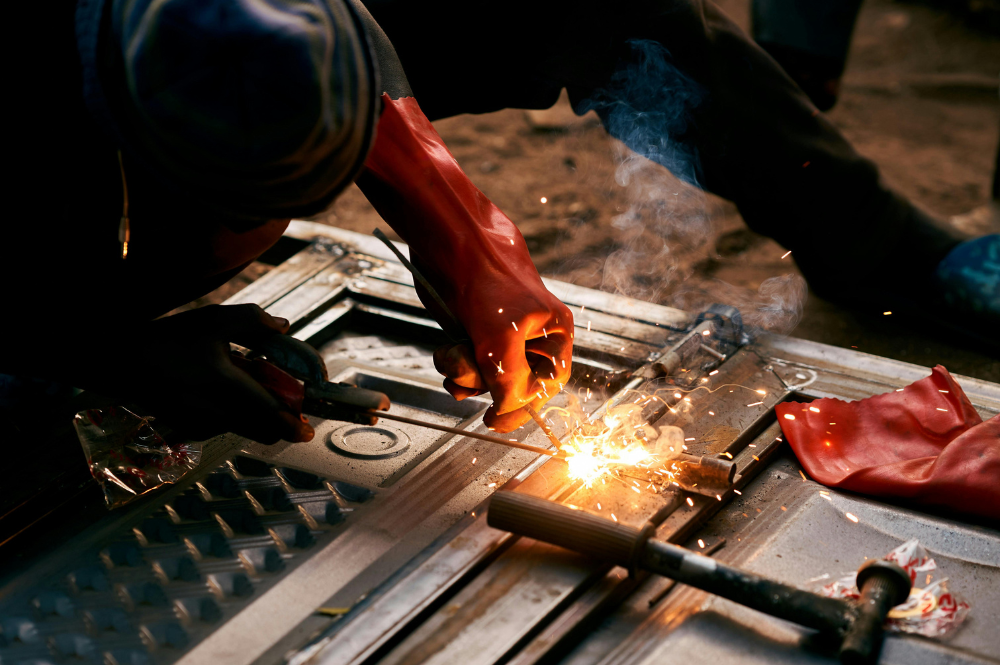
Many industries rely on precise metal joining methods to build durable equipment and structural components. One of the most respected techniques is TIG welding, known for its accuracy and clean results. Understanding TIG welding helps manufacturers and maintenance teams choose the right welding process for projects that demand control and high weld quality.
Key Takeaways
TIG welding uses a non-consumable tungsten electrode to create a precise electric arc.
The process relies on inert gas shielding, typically argon, to protect the weld pool.
TIG welding produces high-quality welds with excellent control over heat input.
It works especially well with stainless steel, aluminum, and other nonferrous metals.
Skilled welding professionals are essential to achieve consistent results.
What Is TIG Welding and How Does It Work?
TIG welding, also called gas tungsten arc welding (GTAW), uses a non-consumable tungsten electrode to generate a welding arc. This arc produces intense heat that melts the base metal and forms a weld joint.
During the TIG welding process, the weld area is protected by an inert gas shield, typically argon. This shielding gas prevents atmospheric contamination that could weaken the weld puddle. A separate filler rod may be added to strengthen the joint when necessary.
Unlike other welding processes, the TIG welder manually controls the filler material, welding current, and arc length. That level of control allows for precise heat input and extremely clean welds.
Equipment Used in the TIG Welding Process
The equipment used in tungsten inert gas welding includes several key components that work together to produce stable welds.
A TIG welding system typically includes a welding machine with a constant current power supply that provides electrical energy for the welding arc. The TIG torch holds the tungsten electrode and directs the arc toward the weld joint.
Shielding gas flows through the welding torch to protect the weld pool from oxidation. The gas shield also helps stabilize the arc and cool the torch during operation.
The welder may add filler material using a filler rod to strengthen the joint. Additional tools such as a welding helmet, wire brush, and clamps help maintain safety and proper weld preparation.
Why TIG Welding Produces High Quality Welds
One reason the TIG process is widely respected is the level of control it offers. Compared with MIG welding, TIG welding allows the operator to carefully manage heat input and welding speed.
This precise heat control creates a stable arc and a clean weld puddle. As a result, TIG welding produces high-quality welds with minimal spatter and improved appearance.
Another advantage of TIG welding is the ability to fuse metals without filler material in certain situations. This autogenous welding technique can produce exceptionally clean joints for thin materials.
Because the process is slower and requires more skill, TIG welding is generally more expensive than MIG welding. However, the improved weld quality and precision often justify the additional time and expertise.
Materials Commonly Welded Using TIG
The TIG welding process works well with a variety of metals, particularly those requiring precise heat control.
Stainless steel is one of the most common materials used in TIG welding applications. The process produces smooth welds that maintain corrosion resistance and structural integrity.
TIG welding aluminum is also common. Aluminum and magnesium are often welded using alternating current to remove oxide layers and maintain a stable weld pool.
Other materials include:
Carbon steel and mild steel
Nickel alloys
Copper alloys
Thin sheet metal and nonferrous metals
Where TIG Welding Is Commonly Used
The aerospace industry relies on TIG welding for components that must meet strict safety and performance requirements, including aircraft structures, turbine components, and fuel systems.
The automotive industry uses TIG welding for exhaust systems, aluminum components, and specialty fabrication projects.
Manufacturing environments use TIG welding for equipment frames, stainless steel assemblies, and precision instruments. The process is also common in energy, medical equipment, and industrial fabrication.
TIG Welding Compared to Other Welding Techniques
Many professionals compare TIG welding with MIG welding or stick welding when selecting the best welding process.
MIG welding feeds filler wire automatically through the welding gun, making it faster and more efficient for high-volume production work.
Stick welding uses a consumable electrode coated in flux and works well outdoors in harsh environments.
TIG welding, by contrast, prioritizes precision and control. The welder manually controls the filler rod and torch to produce cleaner welds, especially for thin metals, stainless steel, and aluminum.
Why Skilled Welders Matter
The TIG process demands coordination and technical expertise. The welder must simultaneously control the welding torch, filler rod, and welding current while maintaining proper arc length.
Small adjustments can change the weld puddle and affect weld quality. Experienced welding professionals understand how different materials respond to heat and how to maintain stable welding conditions.
Precision Welding Support for Industrial Projects
Understanding TIG welding helps businesses determine when precision welding is required. Projects involving stainless steel, aluminum, and specialized metal components often benefit from TIG welding techniques.
When performed by experienced welders, the process produces strong weld joints with excellent appearance and structural integrity.
If your project requires reliable welding expertise, CT Products is ready to help. Contact our team today to discuss your welding needs and learn more about our professional welding services.
Frequently Asked Questions
What Is TIG Welding Used For?
TIG welding is commonly used for stainless steel, aluminum, and thin metals that require high weld quality. Industries such as aerospace, automotive, and industrial manufacturing rely on TIG welding for precision metal components.
How Is TIG Welding Different From MIG Welding?
MIG welding uses a continuously fed wire electrode, while TIG welding uses a non-consumable tungsten electrode and separate filler rod. TIG welding provides greater control and produces cleaner welds.
What Gas Is Used in TIG Welding?
The shielding gas used in TIG welding is usually argon. In some applications, helium or gas mixtures are used to improve arc stability and weld penetration.
Can TIG Welding Be Used on Aluminum?
Yes. TIG welding aluminum is common because the process provides precise heat control and strong weld quality. Alternating current is often used to remove oxide layers during welding.
Why Is TIG Welding Considered Difficult?
TIG welding requires coordination between the welding torch, filler rod, and power control. Because the process demands precision and steady hand movement, it takes more training and experience than many other welding techniques.